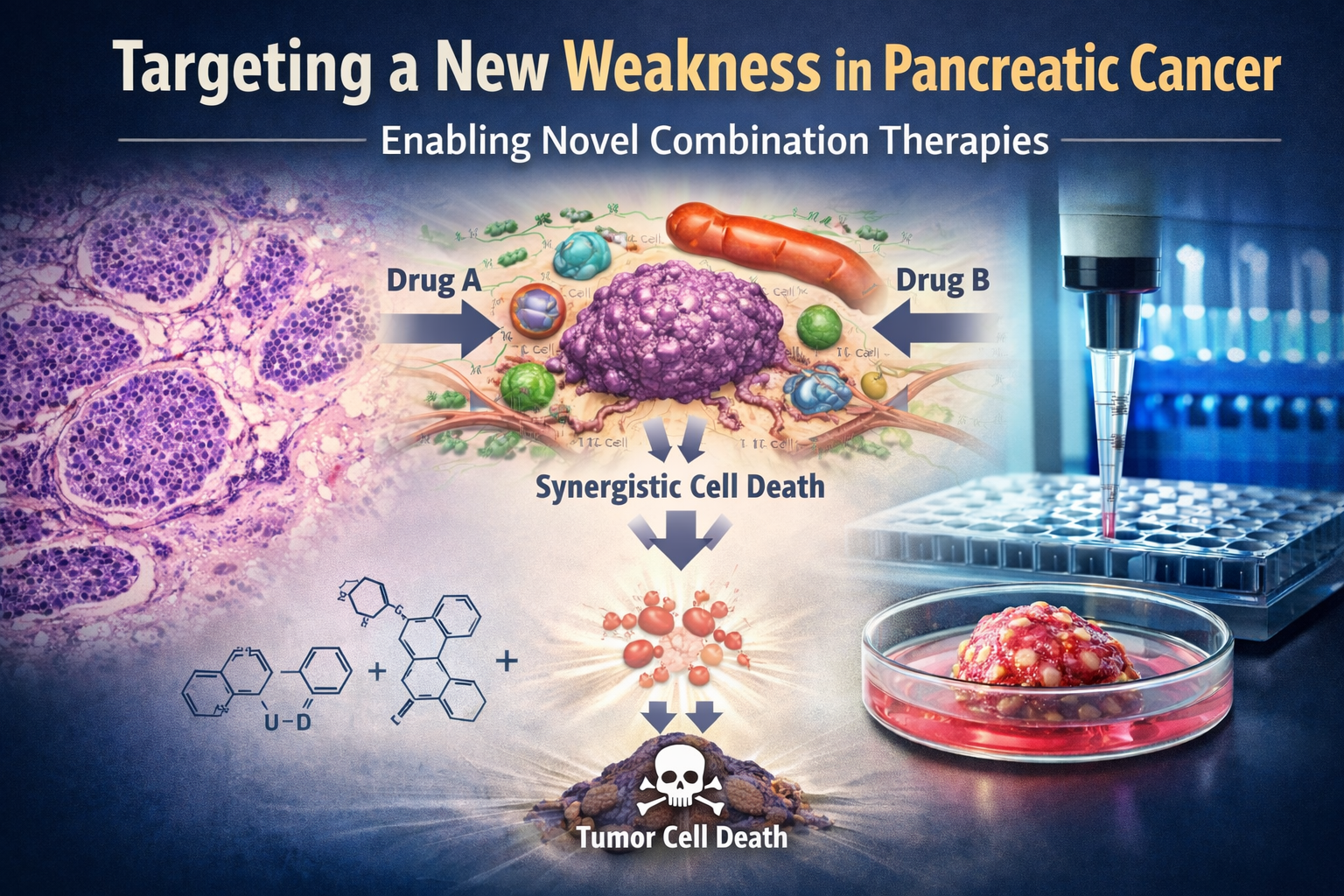
Our Team Identifies a New Weakness in Pancreatic Cancer, Opening the Door to Novel Combination Therapies
Pancreatic cancer remains one of the deadliest malignancies worldwide, with limited treatment options and a five-year survival rate that has improved only modestly over the past decades. Resistance to therapy and rapid disease progression continue to challenge clinicians and researchers alike. Now, our research team has identified a previously underappreciated biological vulnerability in pancreatic tumors that may be exploited through rational combination therapies. Using a powerful genetic screening approach using the CRISPR technology at the genome scale, we identified a protein called HSPE1 that pancreatic cancer cells rely on to survive and grow. We found that HSPE1 helps cancer cells cope with stress inside their mitochondria, the “power plants” of the cell, through two parallel survival pathways. When we blocked these pathways, tumors grew much more slowly or stopped growing altogether in multiple preclinical models, including patient-derived tumors. Most importantly, we showed that simultaneously targeting both pathways is far more effective than blocking either one alone, revealing a new combination therapy strategy for pancreatic cancer. This study was recently accepted for publication in Molecular Cancer (IF 34).